
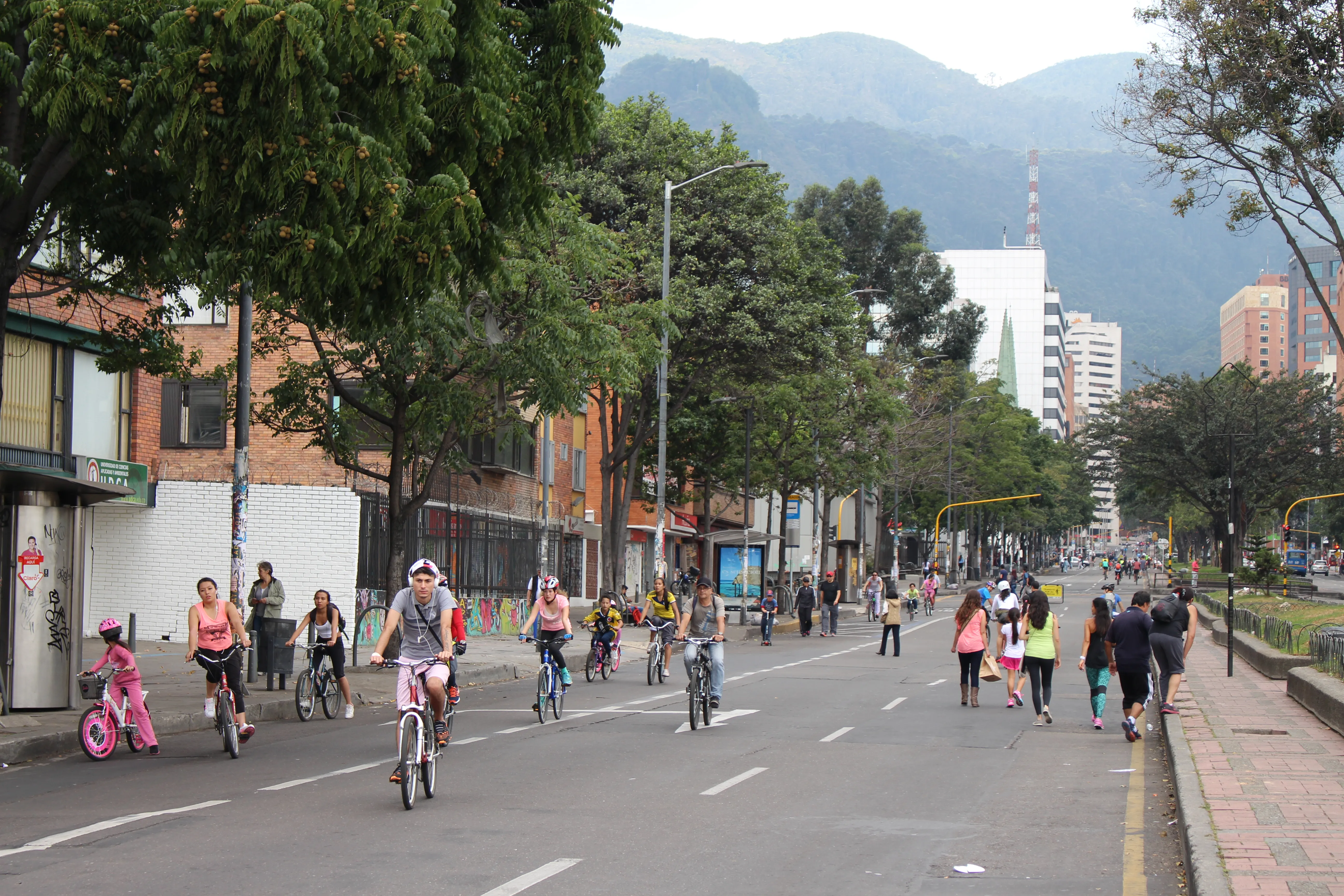
Colombia’s capital, Bogotá, you have probably heard of in many different contexts, but do you know about Ciclovía?
Ciclovía is an initiative during which city streets are temporarily closed to cars
and opened to cyclists, runners, pedestrians, and other non-motorized activities.
History
Its origin dates back to a one-day protest in 1974. Today, it covers 127 km and on average 1.5 million residents of Bogotá join the activity.
It creates an environment that encourages physical activity among the population. The idea was simple: on Sundays, the city’s main streets would be temporarily freed from cars so that citizens could move safely and enjoy their time.
Today in Bogotá, hundreds of kilometers of streets are closed every week, and more than one million people participate. The initiative has since spread to other cities around the world.
How does it work?
- Streets are temporarily closed to motor vehicles.
- The space becomes accessible for cycling, running, and walking.
- Sports, cultural, and social activities are often organized.
Why is it important?
Safety
A car-free environment reduces the risk of accidents and creates a calm, safe space.
Health
It promotes physical activity and an active lifestyle.
Ecology
It reduces emissions and noise levels.
Public Space
The street temporarily becomes a space for social interaction and community.
Other Names Around the World
In many countries, similar formats are known as: Open Streets, Car-Free Day, Sunday Streets.
Is a Similar Initiative Possible in Georgia?
Temporarily closing streets on special days could become a way to strengthen the cycling community, improve road safety, and raise environmental awareness.
If you had the choice, would you support such an initiative?
Which streets would you dedicate one day per week to pedestrians, cyclists, and others?
Conclusion
Ciclovía shows that city streets can serve not only transportation, but people as well. It is a model that promotes healthy, safe, and people-centered cities.

Comments (0)
No comments yet.