
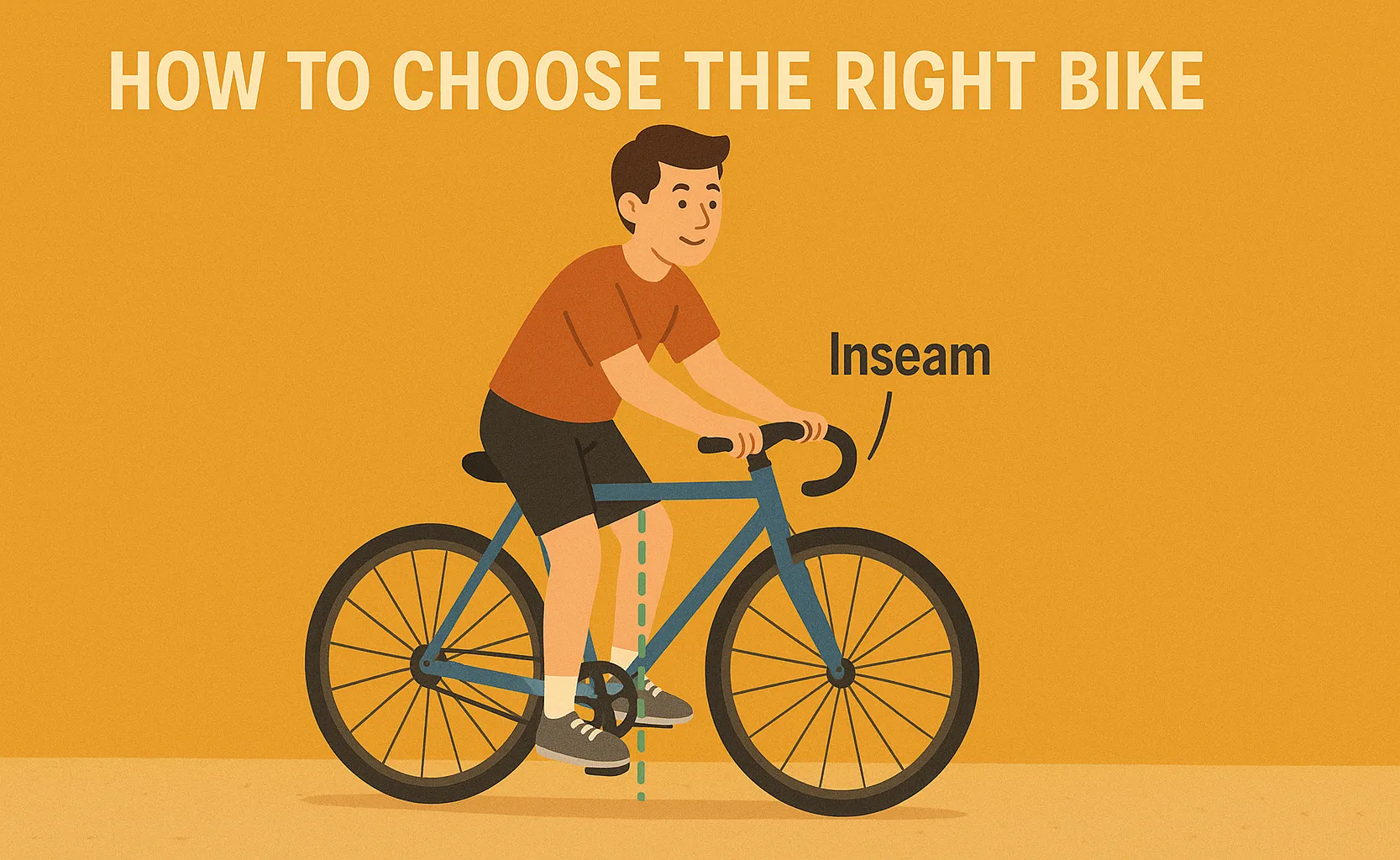
Choosing the correct bike size matters for comfort, control, and injury prevention. This guide helps you find the right fit based on your height, inseam, and riding style.
Why bike size matters
A bike that is too big or too small can cause discomfort, reduced control, and overuse injuries. Key benefits of the right size include:
- Comfort: a natural position and less fatigue.
- Efficiency: better power transfer while pedaling.
- Safety: improved handling and stability.
- Injury prevention: reduced stress on joints and muscles.
Size charts by bike type
Different bike categories use different sizing standards. Mountain and hybrid/city bikes are often listed in inches, while road bikes are commonly listed in centimeters.
Mountain bike (MTB) size chart
| Height (cm) | Frame size (inches) |
|---|---|
| 150 - 160 | 13" - 15" |
| 160 - 170 | 15" - 17" |
| 170 - 180 | 17" - 19" |
| 180 - 190 | 19" - 21" |
| 190+ | 21" - 23" |
Road bike size chart
| Height (cm) | Frame size (cm) |
|---|---|
| 150 - 160 | 48 - 51 cm |
| 160 - 170 | 51 - 54 cm |
| 170 - 180 | 54 - 57 cm |
| 180 - 190 | 57 - 60 cm |
| 190+ | 60 - 63 cm |
Hybrid and city bike size chart
| Height (cm) | Frame size (inches) |
|---|---|
| 150 - 160 | 14" - 16" |
| 160 - 170 | 16" - 18" |
| 170 - 180 | 18" - 20" |
| 180 - 190 | 20" - 22" |
| 190+ | 22" - 24" |
How to measure your inseam
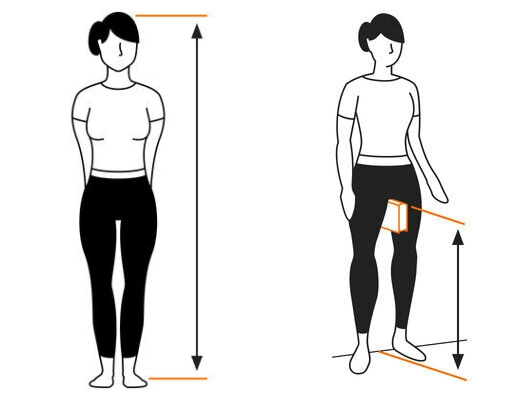
Height is a good starting point, but inseam gives a more accurate frame size estimate. Measure it like this:
- Stand against a wall with your feet slightly apart.
- Place a book between your legs, like a bike saddle.
- Measure from the floor to the top edge of the book.
Then use these formulas:
- MTB: inseam × 0.66 = frame size (inches)
- Road: inseam × 0.70 = frame size (cm)
Additional factors
1) Riding style
- Aggressive/racy riders: sometimes prefer a slightly smaller frame for control.
- Comfort and long rides: a more relaxed position matters most.
2) Frame geometry
Geometry varies between brands and models, so the same “size” can feel different. If possible, compare reach/stack and the overall fit.
3) Standover height
This is the clearance between you and the top tube when standing over the bike. Typical guidance:
- Road: about 1-2 inches of clearance
- MTB: about 2-3 inches of clearance
4) Reach to the handlebar
You should reach the bar comfortably without over-stretching. If your neck or shoulders feel strained, reach is often the issue.
Basic bike fit adjustments
- Saddle height: a slight bend in the knee at the bottom of the pedal stroke.
- Saddle fore-aft: adjust forward/back for efficient pedaling.
- Handlebar height: lower for a sporty position, higher for comfort.
What if you are between sizes?
- Smaller frame: easier to control and maneuver.
- Larger frame: can feel more stable on longer rides.
- Adjustments: stem, saddle, and bar tweaks can fine-tune fit.
Test before you buy
If you can, a short test ride is the best way to confirm size. Check:
- Comfort: does your position feel natural?
- Handling: how does the bike respond to steering?
- Control: are your hands and feet placed comfortably?
Final thoughts
The right bike size is the foundation of comfortable and safe riding. Start with height, confirm with inseam, consider bike type and geometry, and test ride whenever possible.

Comments (0)
No comments yet.